

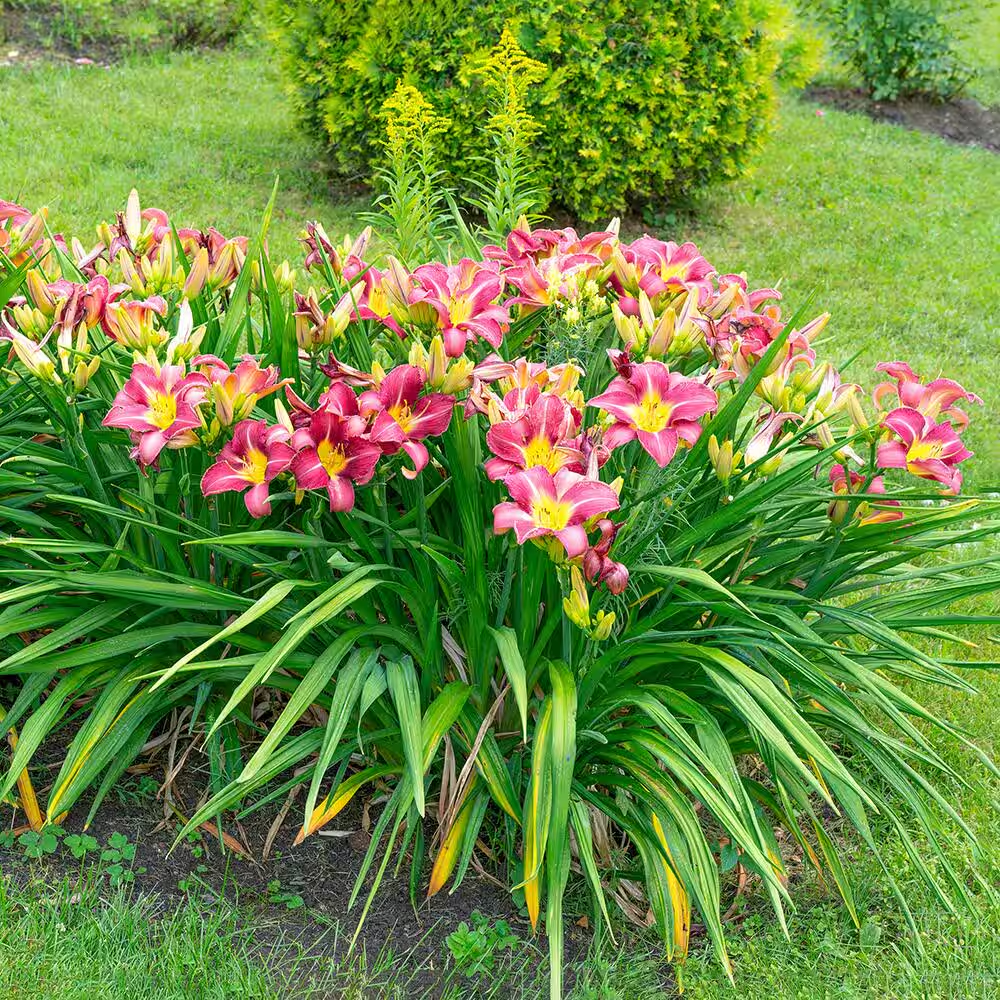
Growers who raise daylilies in quantity tend to agree on one point: soil matters more than most gardeners think. Not because daylilies are especially fussy, but because the wrong ground quietly limits flowering, root growth and long-term vigour. Plants may survive in poor conditions for years while never showing what the variety can actually do.
That gap between survival and performance explains why experienced growers pay close attention to texture, drainage, organic matter and pH before they think about feeding. A daylily in the right soil usually needs less intervention later. A daylily in the wrong soil often becomes a project of constant correction.
The professional advice from the premier grower of daylily plants, Swallowtail-Daylilies, reflects that practical approach: when customers ask about choosing sites or assessing daylily plants for sale, the emphasis is not on chasing perfect laboratory numbers but on creating open, moisture-retentive soil that drains reliably after rain. In commercial growing as well as home gardens, strong root establishment is treated as the starting point for repeat flowering, healthy fans and better resilience in both summer heat and winter wet.
Why “well-drained but moisture-retentive” is the real target
The phrase appears in almost every reliable guide to daylilies, yet it is often misunderstood. Many gardeners hear “well-drained” and assume dry, gravelly or thin soil is ideal. In reality, growers usually mean something more balanced. Daylilies dislike standing water around the crown and roots, especially in cool weather, but they also perform poorly in ground that sheds moisture too quickly. They want access to water without being trapped in it.
This preference makes sense once you look at the plant’s growth habit. Daylilies build fleshy roots that store moisture and nutrients, but those roots still need oxygen. In heavy, compacted clay, pore spaces collapse and water lingers, reducing air around the roots. In very light, sandy soils, oxygen is not the problem; the issue is that moisture and nutrients move through too fast for steady growth. In both cases, flowering suffers, though for different reasons.
Growers therefore aim for a friable soil that can hold shape loosely when squeezed but breaks apart easily. Loam is often described as ideal, yet the term matters less than the practical result. The right soil warms steadily in spring, never feels greasy for long after rainfall and does not bake into a hard cap in dry weather. If a border floods for a day after rain or cracks deeply in midsummer, it is probably outside the range daylilies truly prefer.
This is why improvement methods need to match the existing ground. Heavy clay benefits from structure-building organic matter and, where necessary, raised planting to lift crowns above the wettest zone. Very sandy soil benefits from materials that increase its capacity to hold water and nutrients. The goal in both cases is consistency. Daylilies forgive occasional stress, but they reward an even root environment with stronger scapes, more buds and quicker clump development.
Texture and structure matter more than feeding regimes
A common mistake is to treat poor flowering as a feeding problem when it is actually a soil structure problem. Fertiliser cannot compensate for compacted ground. If roots are restricted by density or poor aeration, extra nutrients often go unused, wash away or create soft, imbalanced top growth that does not improve the plant overall.
Growers who handle many cultivars tend to focus first on the physical condition of the soil. Texture refers to the relative amounts of sand, silt and clay. Structure refers to how those particles bind into aggregates. Daylilies tolerate a range of textures, but they respond badly to poor structure. A clay loam with good crumb structure can grow excellent plants. A lighter soil that has been trampled, overworked or depleted of organic matter may underperform despite appearing loose on the surface.
For home gardeners, the useful test is simple. Dig a spade’s depth where you intend to plant. If the soil forms dense plates, smells stagnant or shows a greyish, slick layer beneath the surface, drainage and aeration need attention. If water from a watering can disappears instantly and the soil feels dusty a day later, the site may be too drought-prone unless improved. Neither condition rules out daylilies, but both call for preparation before planting.
Organic matter is central because it improves both extremes. In heavier soils, it helps create more pore space and encourages a more open structure. In lighter soils, it acts like a reserve, slowing water loss and increasing nutrient retention. Well-rotted compost or leaf mould is generally more useful than dramatic one-off applications of rich manure, which can overstimulate leafy growth. The aim is not lushness for its own sake. It is a root zone that stays workable, airy and evenly moist through the main growing season.
This is also why repeated shallow hoeing around daylilies can be counterproductive. It may break surface crust temporarily, but it can damage roots and encourage top-layer drying. A better approach is to build the soil before planting, then protect its structure with mulch and careful watering.
The pH range daylilies accept, and the limits of that tolerance
Daylilies are often praised as tolerant of different pH levels, and that reputation is deserved to a point. They are not among the most acid-sensitive or lime-sensitive ornamental perennials. Many will grow perfectly well in neutral soil and remain productive across a modestly acidic to slightly alkaline range. This tolerance is useful in ordinary British gardens, where perfect pH adjustment is rarely necessary.
However, tolerance should not be mistaken for indifference. At the extremes, pH affects nutrient availability, root activity and overall plant balance. In strongly acidic ground, deficiencies can appear even if nutrients are technically present. In highly alkaline soil, certain micronutrients become less available, sometimes leading to pale growth or reduced vigour. Daylilies may persist under those conditions, but flowering and clump strength can fall below their potential.
Most growers therefore prefer not to chase a narrow number but to avoid extremes. Soil that sits roughly around slightly acidic to neutral, or just on the alkaline side of neutral, is generally workable provided structure and drainage are sound. It makes little sense to obsess over small fluctuations while ignoring compaction or waterlogging, which usually do more damage.
Testing is still worth doing when performance is poor without obvious cause. A basic soil test can confirm whether the problem lies in pH, low organic matter or nutrient imbalance. Yet any corrective action should be measured. Over-liming, for instance, can create fresh issues while trying to solve a minor one. Daylilies respond best to gradual adjustment integrated with better soil conditioning, not aggressive chemical swings.
Gardeners should also remember that local conditions matter more than broad labels such as “chalky” or “acid”. One border may be improved, mulched and well planted while another a few metres away remains compacted and thin. That is why experienced growers rely on observation as much as testing. Leaf colour, bud count, root expansion and the speed at which a clump settles are all practical indicators of whether the soil is meeting the plant’s needs.
How moisture levels shape flowering, bud count and plant health
Gardeners often notice soil problems first through the flowers. Buds may be fewer than expected, scapes shorter, or blooms smaller and less consistent. While variety and sunlight both matter, soil moisture is often the hidden factor behind weak performance. Daylilies are tougher than many perennials, but the best flowering usually comes from steady access to moisture during active growth, especially as buds form.
This does not mean constantly wet soil. In fact, excessive moisture can be just as harmful as drought. Waterlogged ground reduces oxygen at the roots, and roots under oxygen stress cannot support strong top growth. Plants may look tired even when the soil is wet, leading gardeners to add more water and worsen the problem. On the other hand, soil that dries hard between waterings can interrupt growth, causing the plant to conserve resources and reduce flower production.
Growers usually manage this balance by focusing on the soil profile rather than surface appearance. A lightly dry top layer is not necessarily a concern if moisture remains lower down where the main roots are active. Frequent shallow watering can encourage weaker, surface-level rooting. Less frequent but deeper watering, combined with soil rich in organic matter, is normally more effective.
Mulch plays a useful role here. A moderate mulch helps buffer temperature swings, reduces evaporation and protects soil structure from heavy rain. It can be particularly valuable in borders where daylily plants for sale are being established after planting, because freshly planted divisions need consistent conditions while new roots move into the surrounding soil. The mulch should not smother the crown, but it can make a noticeable difference during the first growing season.
One reason commercial growers often produce more reliable clumps is that they reduce extremes. They do not necessarily provide pampered conditions; they provide steady ones. That steadiness allows roots to expand, supports stronger bud formation and improves the plant’s ability to cope with periods of heat or irregular weather without losing performance.
Common garden soils and how growers adapt them for daylilies
Few gardeners start with ideal loam, so adaptation is part of the real story. Daylilies can be grown in clay districts, on sandy plots and in mixed suburban soils that have been disturbed by building work. The difference between success and disappointment usually lies in how the ground is prepared before planting rather than in the label attached to the soil.
In clay-heavy gardens, drainage is the priority, but not by adding random grit and hoping for the best. Growers usually improve clay by incorporating bulky organic matter that opens the soil over time, then avoiding compaction by keeping off wet borders. Raised beds or slight mounding can be highly effective where winter wet is persistent. Planting crowns a little proud of the surrounding soil level also helps reduce the risk of rot around the neck of the plant.
In sandy or gravelly soils, the challenge is the opposite. Water drains quickly, fertility is often low and summer stress arrives fast. Here the remedy is not to make the soil heavy, but to increase its capacity to retain water and nutrients. Repeated additions of composted material, followed by mulching, can transform how well the border carries moisture through warm spells. Plants may also need closer monitoring in their first year, as young divisions dry out faster than established clumps.
Urban and new-build soils can be the most awkward of all because they combine rubble, compaction and uneven drainage. In such sites, it is often sensible to dig wider than expected, remove obvious debris and rebuild the planting area rather than slotting plants into narrow holes. A healthy root run matters more than the initial size of the top growth. Gardeners shopping around for daylily plants for sale often focus on the cultivar, but the planting bed will decide far more about the result than the label on the pot.
Whichever soil type you have, the principle remains the same: avoid extremes, improve gradually and observe how the ground behaves after rain and during dry spells. Daylilies respond generously when those basics are right.
What the best growers watch after planting
Getting the soil right at planting time is only the beginning. Skilled growers continue to read the soil through the plant’s response. They watch how quickly new fans form, whether the leaves remain clean and upright, how many scapes emerge and whether flowering improves from one season to the next. These signs say more than a single flush of bloom ever can.
The first year after planting is mainly about establishment. Daylilies may flower, but root expansion is the more important event. Soil that remains open and moderately moist encourages roots to move outward rather than circling in the original planting pocket. This is why overfeeding early on is rarely useful. Excess nitrogen can push soft leaf growth before the plant has properly settled. Balanced nutrition matters, but it works best when the soil already supports air, moisture and biological activity.
Growers also know when not to intervene. A clump that looks slower in a cool spring may simply be responding to temperature, not poor soil. By contrast, repeated signs of stress after rain, chronic yellowing or steady decline in bud count point back to root conditions. At that stage, lifting and replanting into better-prepared soil can be more effective than adding more fertiliser or fungicide.
Long-term performance often depends on maintaining the ground as much as improving it initially. Organic mulches break down, borders compact under foot traffic and neighbouring plants compete for water. Refreshing mulch, topping up organic matter and dividing congested clumps when needed all help preserve the soil environment that daylilies prefer. The reward is not merely survival, but stronger repeat performance year after year.
That is the main lesson growers return to: daylilies are adaptable, but they are not indifferent. Their preferred soil is neither rich mud nor dry rubble. It is an open, workable medium with reliable drainage, enough organic content to hold moisture and a balanced chemistry that lets roots function without stress. Give them that, and they stop behaving like merely tolerant plants and start showing why they are among the most dependable ornamentals in the garden.