

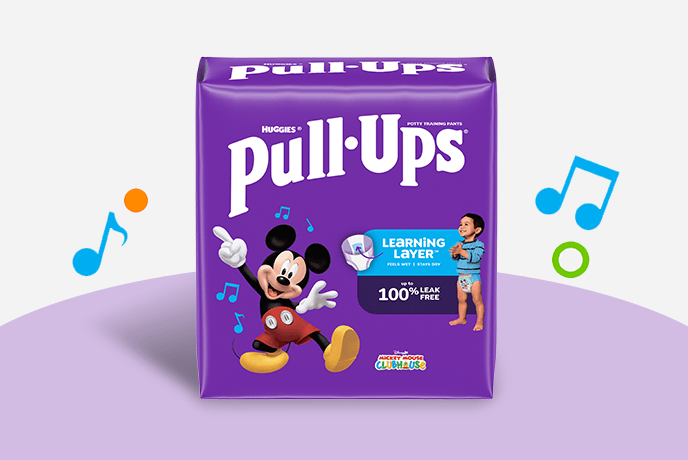
What Is a Pull-Up Diaper?
A pull-up (also called a pant-style diaper or training pant) is a disposable diaper shaped like underwear, with an elastic waistband that a child can pull up and down. Unlike tape diapers, there is no fastening to undo, which makes pull-ups popular for active toddlers and for potty training, where independence matters.
The Main Types of Pull-Ups
1. Potty Training Pants
Designed for toddlers learning to use the toilet. They are easy to pull up and down and often have a fit and feel close to underwear. Many have printed designs, and some use graphics that fade when wet to help children notice the sensation. These are typically made for daytime use.
Examples: Huggies Pull-Ups, Pampers Easy Ups, Luvs training pants.
2. Night-Time Pull-Ups
Built with extra absorbency for sleep. Parents often find that daytime pants are not enough overnight, so night-time versions cost more per piece but can prevent disrupted sleep and wet bedding.
Examples: Huggies Pull-Ups Night-Time, Pampers Easy Ups overnight styles.
3. Pull-On Diapers for Babies
Not just for potty training. Pant-style baby diapers suit crawlers and early walkers who wriggle too much for tape diapers to be convenient. They are sold in baby sizes rather than toddler training sizes.
Examples: Pampers Cruisers and pull-on lines, Huggies Little Movers slip-on diaper pants.
4. Store-Brand and Value Pull-Ups
Retailer-own brands and budget labels offer lower prices, and many parents find them perfectly adequate for daytime use. The trade-off can be slightly lower absorbency or a less refined fit compared with the big names.
Examples: Parent’s Choice (Walmart), Up & Up (Target), Mama Bear (Amazon), Comfees.
5. Eco and Sensitive-Skin Options
Marketed as fragrance-free, gentler on skin or made with more plant-based materials. These suit children with sensitivities, though they are often thinner and priced higher.
Examples: Hello Bello, Seventh Generation.
6. Premium and Subscription Brands
Positioned on softness, design and ingredient transparency, often sold online or in bulk. These sit at the top of the price range.
Examples: Coterie, Joonya.
Quick Comparison
| Category | Best for | Typical trade-off |
| Potty training pants | Daytime training, independence | Moderate absorbency |
| Night-time pull-ups | Overnight dryness | Higher cost per piece |
| Baby pull-on diapers | Active babies and crawlers | Not designed for training |
| Store brands | Budget-conscious families | Fit and absorbency can vary |
| Eco / sensitive | Skin-sensitive children | Thinner, pricier |
| Premium | Comfort and design | Highest cost |
How Much Do They Cost?
Based on typical online listings, per-diaper prices in the US roughly range from about $0.18 to about $0.50 or more, depending on category. Budget and store brands sit at the low end, mainstream name brands and eco brands in the middle, and night-time and premium options at the top. If you want a closer look at specific brands and where each is sold, this roundup of affordable pull-up diapers and where to buy them online compares prices per diaper across ten popular options. Prices change often, so check current listings before you buy.
How to Choose the Right Pull-Up
- Check the weight range, not just the age. Sizes are based on weight, and a bad fit causes most leaks.
- Decide day or night. Using separate products for each often saves money.
- Look at the waistband and leg openings. They should be snug without leaving marks.
- Consider skin sensitivity. If your child gets rashes easily, test a fragrance-free option.
- Buy a small pack first. Fit varies between brands, so test before buying in bulk.
- Compare price per diaper. The larger count is not always cheaper once you divide.
A Note for Retailers and Brand Owners
Pull-up diapers are also a growing category for private-label brands. Many store brands in the market are made by contract manufacturers, which is one reason value options can perform so close to name brands. If you are thinking about launching your own line, factory selection and sampling matter far more than design alone.
The Bottom Line
The “best” pull-up depends on what you need it to do. For daytime training, a mid-price or store brand often works fine. For nights, it can be worth paying more. For sensitive skin, look at fragrance-free options. Understand the categories first, test a small pack, and compare cost per diaper, and you will avoid most of the guesswork.