

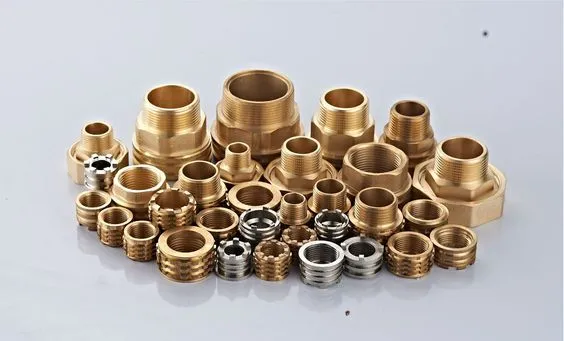
Plastic pipe systems are light, corrosion-resistant and easy to install, but they have one weakness: threads. A plastic thread can crack under repeated tightening or over-torque. That is why many PPR, CPVC and UPVC fittings that connect to metal pipes, taps or valves carry a brass insert, a threaded metal core set into the plastic body.
For plumbing distributors and fitting factories, the quality of that small brass part decides whether the finished fitting leaks. This guide explains what brass inserts do and what to check when choosing a supplier.
What Is a Brass Insert Fitting?
A brass insert is a machined or forged brass component with a male or female thread. During production, the insert is placed in the mold and the plastic is formed around it, or it is joined to the plastic body afterwards. The result is a fitting with a plastic connection on one end and a strong, reusable metal thread on the other.
Common uses include:
- Threaded transition fittings between plastic pipe and metal pipe
- Elbows and tees with threaded outlets for taps, mixers and gauges
- Wall-mounted elbows and union connections
- Valve and meter connections in hot and cold water systems
Male vs Female Inserts
Male inserts have an external thread and screw into a female port. Female inserts have an internal thread and receive a male fitting. Most suppliers offer both, and the choice follows the design of the plastic fitting and what it connects to.
The Specs That Matter
When you request quotes, compare suppliers on the same set of specifications:
- Brass grade. Lead-containing and low-lead or lead-free brass are different products. Check what your destination market requires, especially for drinking water. CW617N is one grade commonly listed for fitting inserts, but confirm the exact alloy in writing.
- Thread standard. Common standards include BSP, BSPT and NPT. A mismatch here causes leaks and returns, so specify it clearly in your order.
- Size range. Inserts for plumbing fittings typically run from about 1/2 inch to 4 inch.
- Surface finish. Natural brass or nickel plating, depending on appearance and corrosion needs.
- Knurling and retention features. The outside of an insert is often knurled or grooved so it locks into the plastic. Poor retention design can lead to the insert turning or pulling out under torque.
- Tolerances and wall thickness. These affect how well the plastic bonds and how the thread performs.
Why the Manufacturing Process Matters
Brass inserts are usually made from forged blanks that are then CNC machined, or from bar stock that is turned on automatic lathes. Forging generally gives a denser structure, which helps resist porosity and leaks, while precise machining keeps thread dimensions consistent. Ask a supplier which process they use, how they check thread gauges, and how often they sample parts during a production run.
How to Evaluate a Manufacturer
A good quote is only part of the picture. Before you commit to a volume order, look at:
- Material traceability. Can the factory show certificates for its brass stock?
- In-house capability. A producer that controls forging, machining and plating tends to be more consistent than one that outsources steps.
- Quality checks. Look for thread gauge inspection, dimensional checks and leak or pressure testing of finished parts.
- Customization. Can they make inserts to your drawings, including special threads and sizes?
- Production scale and lead time. A supplier that supports both small trial runs and repeat bulk orders is easier to work with long term.
- Compliance documents. Ask for the material and safety documentation your target market requires.
If you are comparing sources, a dedicated brass inserts manufacturer that also supplies a wider range of brass fittings can be convenient, because inserts, pipe fittings and related components can be sourced from one place and matched to the same specifications.
Common Problems and How to Avoid Them
- Leaks at the thread. Usually caused by thread mismatch or poor machining. Always test with gauges.
- Insert spinning in the plastic. Caused by weak knurling or poor retention design. Test torque resistance on samples.
- Cracked plastic around the insert. Can result from mismatched shrinkage or over-tightening. Discuss the plastic material with your supplier.
- Discoloration or surface defects. Often from inconsistent plating or poor storage. Inspect a full carton, not just selected pieces.
Questions to Ask Before You Order
- What brass grade do you use, and can you supply the certificate?
- Which thread standards and sizes do you stock or make to order?
- Do you offer OEM production to my drawings?
- What are your sampling and minimum order terms?
- How do you test finished inserts before shipping?
The Bottom Line
A brass insert is a small component with a big job. Decide your material, thread and size requirements first, request samples, test them against your plastic fittings, and choose a supplier that can show consistent quality, not just a low price. Done well, this keeps leaks, returns and warranty claims down.