

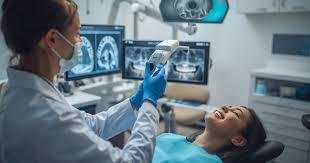
The dental office of today barely resembles the intimidating spaces many people remember from childhood. Behind this transformation lies a technological revolution that’s fundamentally changing not just how dentists work, but how patients experience and think about oral care. These innovations are dismantling old assumptions about dental treatment while opening possibilities that seemed like science fiction just a decade ago.
Digital Imaging Replaces Guesswork
Traditional dental X-rays required patients to bite down on uncomfortable film packets while trying not to gag, then wait for development to see if the images were usable. Digital radiography has eliminated this entire awkward process while providing far superior diagnostic information.
Modern digital sensors capture images instantly, displaying them on screens where dentists and patients can examine them together. The image quality surpasses traditional film, revealing details that might have been missed with older technology. More importantly, digital X-rays require up to ninety percent less radiation exposure than conventional X-rays, addressing long-standing patient concerns about radiation.
The immediacy of digital imaging changes the patient experience fundamentally. Instead of sitting in uncertainty while films develop, patients see their dental structure in real-time. When a dentist Preston locals visit shows them a digital image of a cavity forming between teeth, the need for treatment becomes visually obvious rather than something patients must take on faith.
CAD/CAM Systems Enable Same-Day Restorations
Computer-aided design and computer-aided manufacturing technology has revolutionized how dental restorations get created. Traditional crowns required messy impressions, temporary crowns, and multiple visits spread over weeks. Modern CAD/CAM systems can design and mill a permanent crown in a single appointment.
The process starts with a digital scan of the prepared tooth, eliminating the gag-inducing impression material many patients dreaded. Software then designs the restoration, and an in-office milling machine creates it from a ceramic block within an hour or two. Patients leave the same day with their permanent restoration.
This same-day capability transforms the patient experience by eliminating the vulnerability and inconvenience of temporary restorations. It also improves outcomes because digital impressions capture more accurate detail than traditional methods, leading to better-fitting restorations.
3D Printing Opens New Possibilities
Three-dimensional printing technology is revolutionizing multiple aspects of dentistry, from creating precise models for treatment planning to manufacturing custom aligners, surgical guides, and even some dental appliances.
The ability to print accurate models of a patient’s dental structure allows for detailed planning of complex procedures. Surgeons can practice on physical models before touching the actual patient, improving precision and reducing procedure time. Custom surgical guides printed from digital scans ensure implants get placed in exactly the right position.
For orthodontics, 3D printing has enabled the clear aligner revolution. Each set of aligners can be custom-printed based on digital treatment plans, offering aesthetically pleasing alternatives to traditional braces for many patients.
Teledentistry Expands Access
Video consultation technology has brought dental care into patients’ homes for certain types of visits. While hands-on treatment still requires in-person appointments, teledentistry enables consultations, follow-ups, and preliminary assessments remotely.
This technology particularly benefits people with mobility limitations, those in rural areas, and individuals seeking second opinions. Parents can get quick assessments of children’s dental concerns without leaving home. Post-operative checks can happen via video rather than requiring return trips to the office.
The COVID-19 pandemic accelerated teledentistry adoption, and many practices now offer hybrid models combining in-person and virtual care. This flexibility is changing patient expectations about accessibility and convenience in dental care.
Teledentistry adoption surged during COVID-19 and continues evolving. A review found that teledentistry offers an effective means for dental referrals, treatment planning, and compliance, with asynchronous communication and smartphone image capturing proving feasible and convenient.
AI-Assisted Diagnosis Improves Accuracy
Artificial intelligence systems trained on millions of dental images can now assist dentists in detecting cavities, gum disease, and other conditions. These systems analyze X-rays and scans, flagging potential problems that human eyes might miss, especially in early stages when intervention is easiest.
AI doesn’t replace professional judgment but augments it, serving as a second set of eyes that never gets tired or distracted. For patients, this means increased confidence that problems will be caught early when treatment is simpler and less expensive.
The technology continues evolving rapidly, with AI systems becoming increasingly sophisticated at predicting disease progression and treatment outcomes, enabling more personalized treatment planning.
Smart Toothbrushes Connect Home Care to Professional Care
Electric toothbrushes with sensors, connectivity, and smartphone apps are transforming home dental care from a routine chore into a data-driven activity. These devices track brushing patterns, pressure, coverage, and duration, providing feedback that helps users improve their technique.
Some smart toothbrushes can even share data with dental professionals, allowing dentists to review patients’ home care habits and provide targeted advice. This connection between home and professional care creates continuity that can significantly improve oral health outcomes.
The gamification features in many apps, particularly those designed for children, make brushing more engaging and help establish consistent habits that last a lifetime.
Pain Management Innovations
Technology has revolutionized pain management in dentistry. Computer-controlled anesthetic delivery systems inject numbing medication slowly and at controlled pressure, reducing the discomfort of injections. Some systems even warm the anesthetic to body temperature, further minimizing sensation.
Topical anesthetics have improved significantly, providing more effective numbing before injections. Combined with modern injection techniques, many patients report feeling little or nothing during the numbing process.
The Transformation of Patient Expectations
Perhaps the most profound impact of dental technology isn’t any single innovation but how these technologies collectively reshape patient expectations and experiences. Dental care is no longer something to fear and avoid but something manageable, often comfortable, and increasingly personalized.
When patients can see their dental conditions clearly, receive same-day treatments, experience minimal discomfort, and maintain their oral health with smart technology at home, their entire relationship with dental care transforms. The technology doesn’t just improve clinical outcomes; it makes dental care feel accessible, transparent, and patient-centered.
As these technologies continue evolving and new innovations emerge, the gap between the old model of dental care and the new one will only widen. For anyone who’s avoided dental visits based on outdated assumptions about what dental treatment involves, exploring how modern technology has transformed the experience might be the first step toward better oral health.
